 Japan eSIM | DJB
 South Korea eSIM | DJB
 Thailand eSIM | DJB
 Americas eSIM | DJB
 Americas eSIM | DJB
 Philippines eSIM | DJB



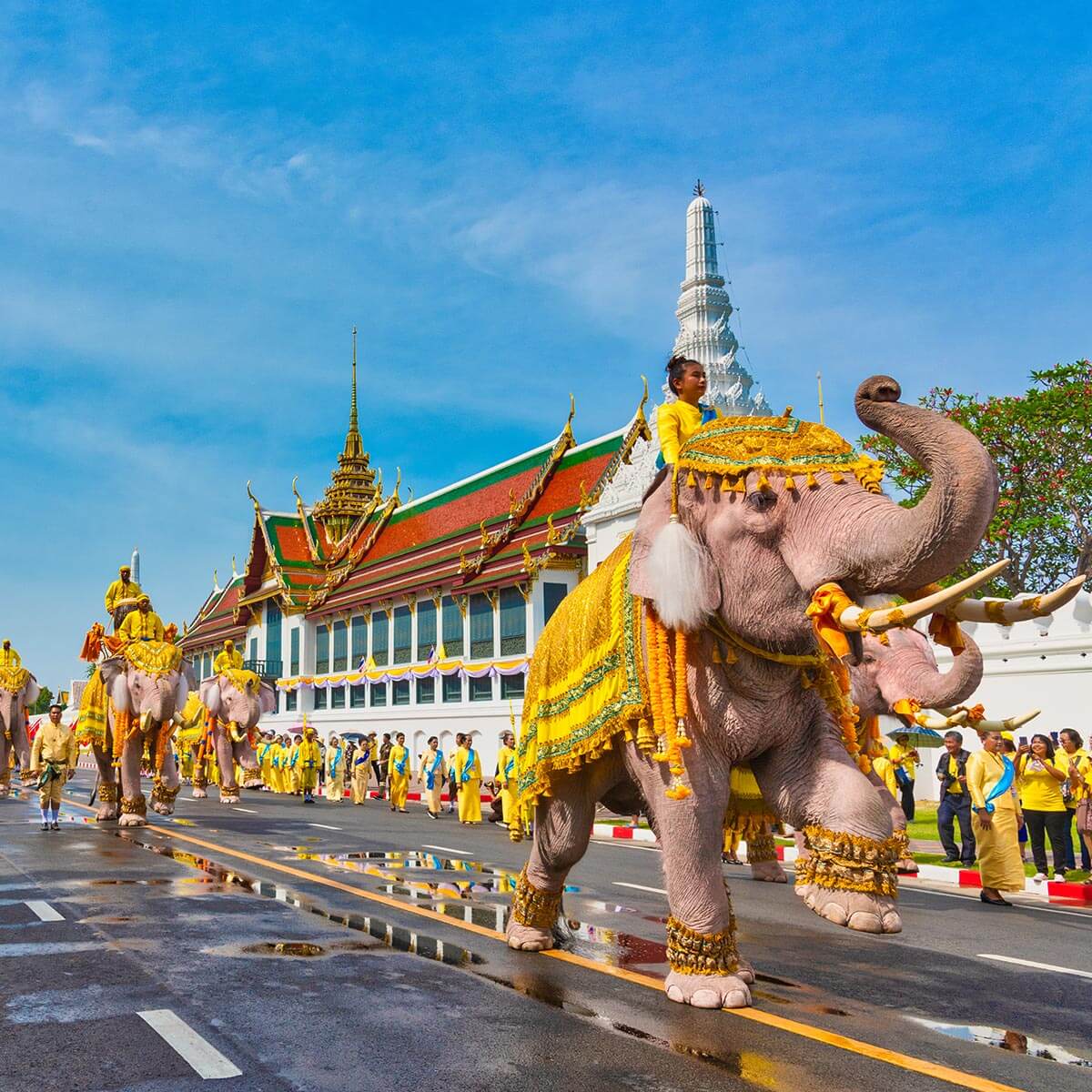
The latest Bangkok subway map is here! Bangkok's rail network splits into three systems: the "Bangkok MRT", the "BTS Skytrain", and the "Airport Rail Link City Line". The MRT and BTS are the two you will rely on most to get around the city's attractions, so let DJB walk you through the details — plus how one single card can take you all over Bangkok!

Image source: Tourism Authority of Thailand
1. Understanding the Bangkok MRT: routes and fare estimates
The MRT splits mainly into two main lines (Blue and Purple) plus two more recently opened monorail lines (Yellow and Pink). The first line, the Blue Line, officially opened in July 2004, and unlike the BTS, it runs mostly underground, serving central Bangkok and its surrounding areas, with several stations connecting to the BTS and other public transport systems.
[Blue Line / Purple Line]
- Blue Line
Runs underground, passing well-known spots like Bangkok's old town, Chinatown and the Patpong night market. This line does not accept the Rabbit Card, so you will need to buy tickets at a machine or ticket counter.
- Purple Line
Runs elevated, and is used less often by tourists. It passes Southeast Asia's largest shopping mall, Central Plaza WestGate, as well as Mongkut Saran Park and other stops. Note that this line also does not accept the Rabbit Card, so tickets must be bought at a machine or counter too!
While the Rabbit Card does not work on these lines, both now support tap-to-pay with Visa and Mastercard. Single-trip fares range from ฿17 to ฿70, and you can estimate your fare on the official Bangkok MRT website!
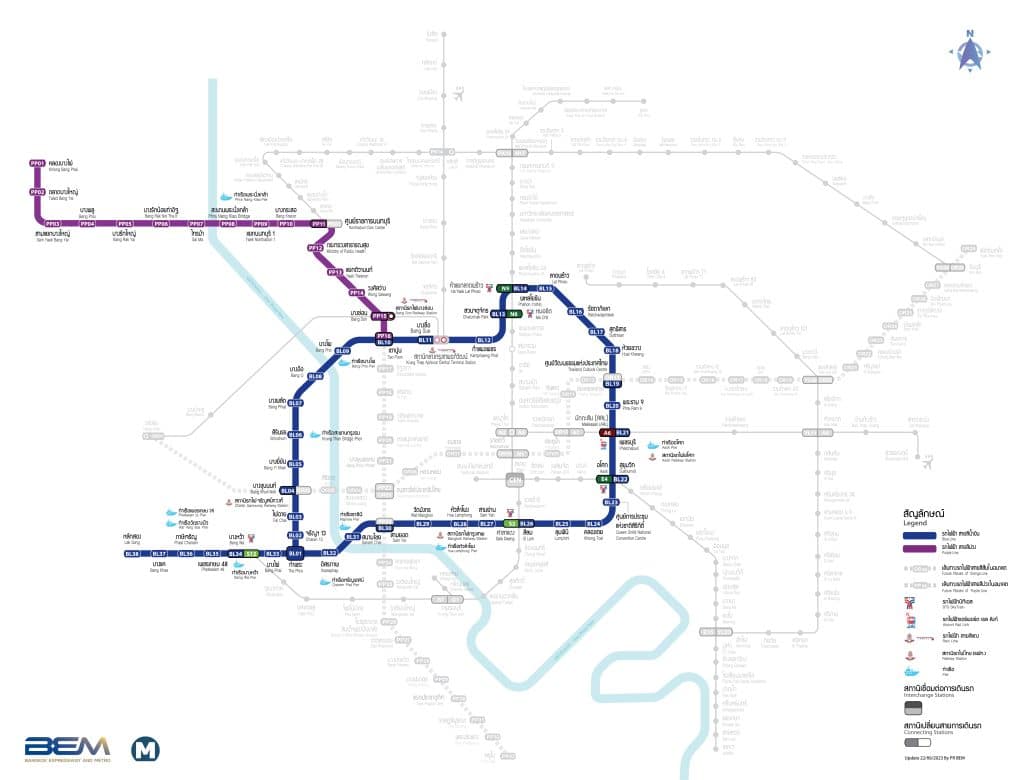
Image source: Bangkok MRT official website
[Yellow Line / Pink Line]
- Yellow Line
Began operating in July 2023, connecting to the Blue Line at Lat Phrao Station, the Airport Rail Link at Hua Mak Station, and the BTS Sukhumvit Line at Samrong Station. Along the way you can reach the Srinagarindra Train Night Market, Rama IX Royal Park, and the Chuchak 4 night market.
- Pink Line
Officially launched in January 2024, mainly serving northern and eastern outer Bangkok, connecting to the Purple Line at Nonthaburi Civic Center Station, the State Railway of Thailand's Dark Red Line at Lak Si Station, and the BTS Sukhumvit Line at Wat Phra Sri Mahathat Station.
Both lines accept the Rabbit Card as well as tap-to-pay via Visa and Mastercard, with single-trip fares ranging from ฿15 to ฿45. You can also estimate fares on the monorail's official website.
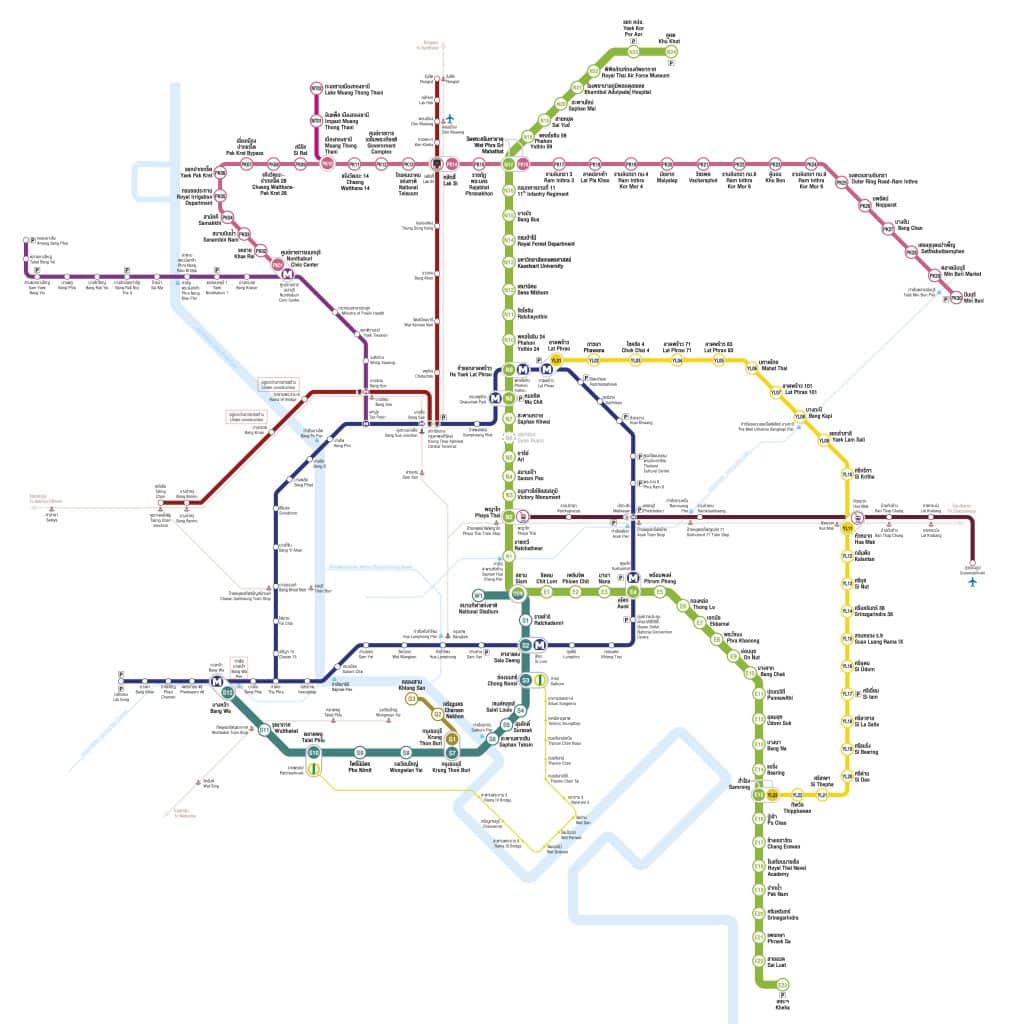
Image source: Bangkok Expressway and Metro official website
2. Understanding the BTS Skytrain: routes and fare estimates
If you want to explore Bangkok properly, the BTS Skytrain will be your most-used public transport option! It splits into the light-green Sukhumvit Line, the dark-green Silom Line, and the Gold Line, and a huge number of attractions sit right along the Sukhumvit Line!
Single-trip fares range from ฿16 to ฿59. Beyond ticket machines in-station, the BTS also supports payment via the Rabbit Card and LINE Pay! To estimate a fare, check the official website.
Image source: Bangkok Expressway and Metro official website
3. Bangkok's go-to transport card: the "Rabbit Card"
Feeling a bit lost about what the "Rabbit Card" actually is? DJB has put together the key details — since it is Bangkok's most widely used transport card, we recommend grabbing one right after you land, before you start getting around the city!
[Tips for buying a Rabbit Card]
- Standard price: ฿200 (includes ฿100 usable balance plus a ฿100 non-refundable deposit)
- Top-up amounts range from ฿100 to ฿4,000 per transaction
- Works on the BTS Skytrain, MRT Yellow/Pink Lines, BRT buses, and select participating retailers
- Buying or topping up at a BTS station counter requires real-name registration, so you will need to show your passport. Besides topping up at any BTS station, you can also top up at participating shops (such as 7-Eleven, McDonald's, and Starbucks)

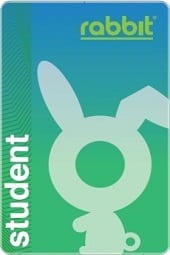

Image source: BTS official website
4. FAQ
Q1: Does the Rabbit Card expire?
Yes! The physical card is typically valid for 7 years (5 years for older versions) — once expired, it becomes unusable and you will need a new one. The stored balance itself is valid for 2 years; if there is no top-up or ride activity within that period, the card gets frozen and needs to be unlocked at a counter.
Q2: What rules should you know about Bangkok's subway?
- Eating and drinking are not allowed in stations or on trains. If carrying a drink, it must be in a sealed plastic bag or stored inside your bag before you can enter — otherwise you may be denied entry
- Unlike Taiwan, not every station has restrooms, but in most urgent situations, asking a station staff member usually gets you access to the staff restroom
- Priority seating is available on trains for monks, pregnant women, the elderly, children, and passengers with reduced mobility
Feeling more confident about navigating Bangkok's subway now? Grab a DJB SIM card or eSIM and explore this beautiful city, where faith, food, and vibrant nightlife all come together!
Comments are closed for this article.
Comments (0)